Authors’ books differ on top SF films

The question of what are the best science fiction films is frequently the subject of heated debates between academics, SF fans and people who just like movies.

Last May, Turner Classic Movies entered the fray with “Must-See Sci-Fi: 50 Movies That Are Out of This World,” a beautiful 280-page book by Sloan De Forest with an introduction by the legendary Roger Corman. There are plenty of outstanding illustrations in this helpful volume.

I have several differences with some films that are included and some that are excluded. The book “Top l00 Sci-Fi Moves” by Gary Gerani and Steven Jay Schneider’s “101 Sci-Movies You Must See Before You Die” agree with much of what’s in the TCM book, but also have some major differences.

Before getting into that and other debates, here are the films selected in the TCM book by eras:

1902-1936: A Trip to the Moon, Metropolis, Frankenstein, Island of Lost Souls, The Invisible Man, Things to Come.

1937-1950: no films selected.

1951-1959: The Thing from Another World, The Day The Earth Stood Still, It Came from Outer Space, War of the Worlds, Them!, Gojira (Godzilla), 20,000 Leagues Under the Sea, Forbidden Planet, Invasion of the Body Snatchers, The Incredible Shrinking Man, The Fly, The Blob.

1960-1968: The Time Machine, La jetee, These Are the Damned, Alphaville, Fantastic Voyage, Planet of the Apes, 2001: A Space Odyssey, Barbarella.

The human stars of “2001: A Space Odyssey.” Photo by Ronald Hawkins.

1969-1970: none.

1971-1979: THX 1138, A Clockwork Orange, Silent Running, Solaris (original Russian version), Sleeper, The Man Who Fell to Earth, Logan’s Run, Star Wars, Close Encounters of the Third Kind, Alien.

1980-1981: none listed.

1982-1987: E.T.: The Extraterrestrial, Blade Runner (2011 final cut), The Brother from Another Planet, The Terminator, Back to the Future, Brazil, Robocop.

1989-1992: none listed.

1993-2000: Jurassic Park, The Matrix.

2001-2016: A.I. (Artificial Intelligence), Eternal Sunshine of the Spotless Mind, Wall-E, District 9, Arrival.

A close read of the list will show that the films reflect the times in which they were made. The first group of films reflects fears of the future and the hope that humans will grow wiser.

The dark period of 1939-1950 is indicative of a serious time when the world was engaged in a terrible world war and then the rebuilding of the devastated parts of the planet. These serious times were real, not SF.

The cold war that dominated the 1950s (and would continue for decades) and the fears of nuclear war and xenophobia became fodder for SF films during that decade.

Nearly all of the 50 films are notable in a variety of ways, but while we like the humor in some of the TCM picks, we see better examples of it in movies such as Galaxy Quest, a near perfect spoof of Star Trek. And, by the way, not a single Star Trek movie is listed, not Wrath of Khan, not First Contact nor Star Trek XI, J.J. Abrams first crack at Trek, in the TCM book.

In their books published several years before the TCM book, authors
Gary Gerani (GG), author of “Top 100 Sci-Fi Movies,” and Steven Jay Schneider (SS), editor of “101 Sci-Fi Movies You Must See Before You Die,” agree with many of the picks in the newer book. However, they disagree with some picks and list others not in the TCM book.

With that said, I have several differences with some films that are included and others that are excluded from Gerani’s and Schneider’s book.

I am not going to list all of the films they don’t include in their lists, but in the list that follows we’ll list the titles they included that aren’t in the TCM book. We’ll designate each authors picks with their initials and if both pick the same movies we will state that it is a choice of “both.” One distinction that should be noted here is the Gerani is a British writer and Schneider is an American scholar.

The list:

A Trip to Mars, SS; Aelita, SS; Paris Asleep, SS; When Worlds Collide, both; Invaders from Mars, both; It Came from Outer Space, both; Journey to the Center of the Earth, both; The Amphibian Man, SS; Robinson Crusoe on Mars, both; The 10th Victim, SS; Fahrenheit 451, both; Seconds, both; Who Killed Jessie, SS; Quartermass and the Pit or Five Million Miles to Earth, both; Slaughterhouse Five; both; Star Trek II: Wrath of Khan, both; Fantastic Planet, SS; Soylent Green, SS; Westworld, SS; Dark Star, both; Stalker, SS; Time After Time, SS; Star Wars: The Empire Strikes Back, both; Flash Gordon, SS; Scanners, SS; Escape from New York, SS; The Road Warrior, both; The Thing (1982), both; Tron, SS; Videodrome, SS; The Final Combat, SS; Star Wars: Return of the Jedi, SS; Repo Man, SS; 1984, SS; Dune, both; Starman, SS; The Quiet Earth, SS; Aliens, both; Star Trek IV: the Voyage Home, SS; Robocop, both, Akira, SS; The Navigator, SS; Tetsuo — The Iron Man, SS; The Abyss, SS; Total Recall, SS; Terminator 2: Judgment Day, both; Ghost in the Shell (Japan-UK), SS; 12 Monkeys, SS; Independence Day, both; The Fifth Element, SS; Men in Black, SS; Gattaca, both; Starship Trooper, SS; Open Your Eyes, SS; Pi, SS; Galaxy Quest, SS; Signs, SS; Code 46, SS; Primer, SS; I Robot, SS; The Host, SS; Children of Men, SS.
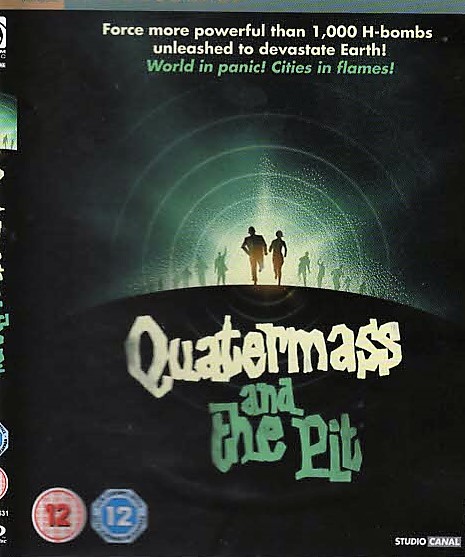
Quartermass

Also, Crack in the World, Doctor Cyclops, Conquest of Space, The Giant Behemoth, The Man from Planet X, The Crawling Eye, The Day of the Triffids, The Man with X-ray Eyes, Unearthly Stranger, It! Terror from Beyond Space, The Humanoids, Red Planet Mars, 2010, Journey to the Far Side of the Sun, X–The Unknown, Rocketship XM, Mysterious Island, Rodan, World Without End, Creature from the Black Lagoon, First Men on the Moon, This Island Earth, I Married a Monster from Outer Space, Predator, The Abominable Snowman of the Himalayas, The Beast from 20,000 Fathoms, Minority Report, The Day the Earth Caught Fire, The Power, Gorgo, Rollerball, I Am Legend, Quartermass II — Enemy from Space,War of the Worlds (2005), On the Beach, The Creeping Unknown — The Quartermass Experiment, Altered States, Destination Moon, The Andromeda Strain, The Man in the White Suit, The Fly (1986), Voyage to the End of the Universe or Ikarie XB1, Colossus — The Forbin Project, Star Trek XI (J.J. Abrams’ first Trek movie), and Village of the Damned, all GG.
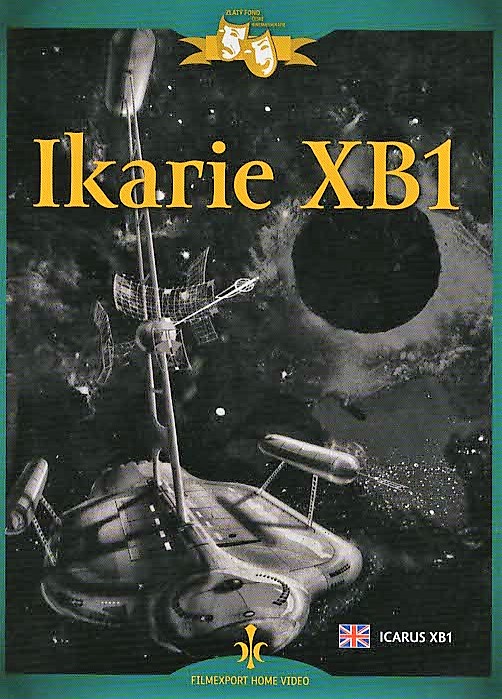
Ikarie XB1

Do I agree with everything in the two alternative books? No way. Some belong, some don’t and there are a few in Schneider’s book that I haven’t seen yet.

Some of the differences I have are a result of this story being written some time after the three books.

2017 Oscar Best Picture winner

Among others I would consider worthy of consideration are The Martian, Avatar, The Shape of Water, Gravity, Inception, Interstellar, Ex Machina, Blade Runner 2049, Inception, King Kong (both the original classic and the 2005 version), Contact, Sunshine (2007), Cocoon, Dr. Jekyll and Mr. Hyde (1931), The Man from Earth, The Hunger Games, The Adjustment Bureau, and others too numerous to name.

I credit the authors for the extremely hard work it took to put together their books. Science fiction is a nearly impossible large subject. Yet, I can’t hardly wait to see what the folks on other worlds are writing about us.

William Shatner, aka Capt. James T. Kirk. Photo by Ronald Hawkins.

f

Great stories from Bedford Indiana have arrived


BEDFORD, Indiana

In case you have wondered what happened to RDH Great Stories, we have been in the lengthy process of moving to Bedford, Indiana, in Lawrence County.

This is a beautiful city, far different from the Indianapolis suburban town of Mooresville, which has its own strengths. Bedford is rich in scenic beauty, history and tradition.

Bedford is the self-proclaimed limestone capital of the world. And if you drive down Ind. 37, south of Bloomington, you will quickly see why it has made that claim.

There’s even one mystery we are trying to unravel regarding the abandoned project to build small models in limestone of the Great Pyramid and the Great Wall of China. We’ve been told, since it involved federal  funds, that it was abandoned after being declared the worst example of Congressional pork barrel spending. That’s understandable to some extent, but we would still like to see what remains of the abandoned project.

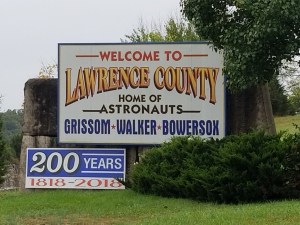
Still, there are lot more things to see and learn about. For example, Mitchell was the hometown of three astronauts including Virgil Gus Grissom, the second U.S. astronaut in space who died years later during the testing of an Apollo craft.

Grissom’s Mitchell connection is duly noted with signs and an impressive monument at Mitchell Town Hall.

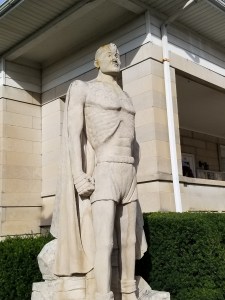
If you drive north to Oolitic, you will find a statue of a nearly forgotten comic character. The statue is a part of a salute veterans.

The character is Joe Palooka, who was featured in an American comic strip about a heavyweight boxing champion, created by cartoonist Ham Fisher in 1921, according to Wikipedia. The strip debuted in 1930 and it was carried at its peak by 900 newspapers.

The strip was eventually adapted for a short-lived, 15-minute CBS radio series, 12 feature-length films, nine Vitaphone film shorts, a 1954 syndicated television series, comic books and merchandise, including a 1940s board game, a 1947 New Haven Clock & Watch Company wristwatch, a 1948 metal lunchbox, and a 1946 Wheaties cereal box cut-out mask. In 1980, a mountain in Pennsylvania was named for the character, according to Wikipedia.

After a 63-year run, it ended Nov. 24, 1984. The impressive statue, however, remains.

Least we forget, Bedford North Lawrence High School, led by star Damon Bailey, won the Indiana High School men’s basketball championship in 1990, when Indiana had only class in the state champship.

There’s lots more that we’ll be covering from our new base, but it seemed to be time to tell you a little bit about Bedford and Lawrence County.


All photos by Ronald Hawkins.

Baseball exhibit open through March 31

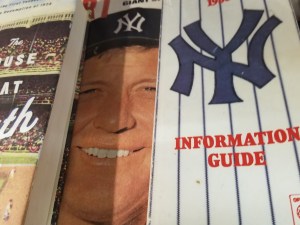
The “Baseball Dreams and Memories” exhibit at the Martinsville main branch of the Morgan County Public Library is now open and is scheduled to there through March 31. The library is open seven days per week, but the hours vary depending on the day of the week. For more information about the library, http://morgancountylibrary.info/

Here’s a taste of what of what the exhibit looks like:

1968-1972: An edgy era of winning films

(Editor’s note: This is the ninth part in a multi-part series on the winners of the Academy Award for Best Picture. They are being presented in chronological order with “Wings,” the first winner, included among the movies reviewed and/or described in the first part.)

The five Oscar winners for Best Picture winners between 1968 and 1972 all had a certain edgy quality to them, even the musical “Oliver,” based on a Charles Dickens book and the stage musical, fits that description.

Those films were certainly reflective of the times with social upheavals, the U.S. presidency of Richard M. Nixon, the ongoing Vietnam War and many other issues shaking the times.

Oliver!, 1968, directed by Carol Reed

Oliver-1968
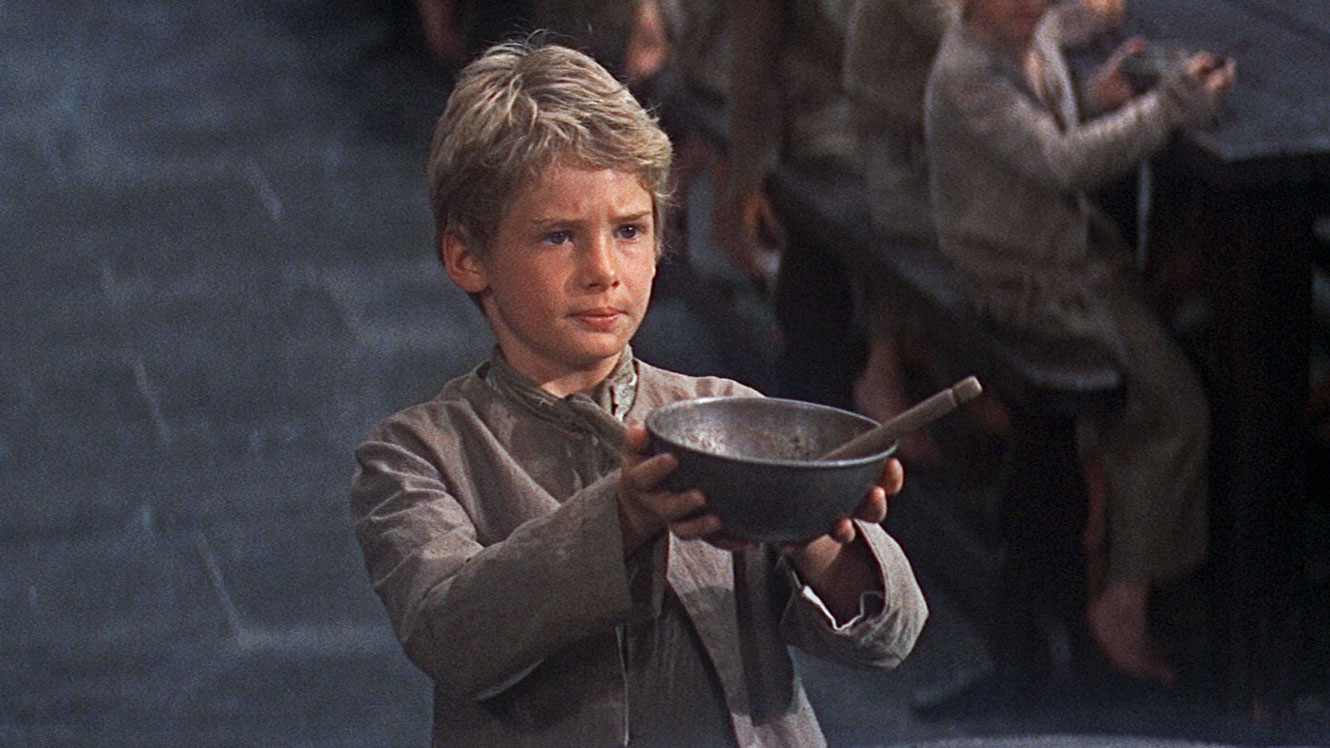
Mark Lester as Oliver seeking more food.

“Oliver!,” the 1968 Academy Award Best Picture winner, not only leaves one humming some of its tunes, but thinking about some of the issues the story raises.

Based on Charles Dickens’ “Oliver Twist,” the movie is story is about a young boy swept into a gang of youthful thieves. It’s a story about poverty, too, and what it forces some people to do. That is still a very relevant issue today at it was in 1968 and when Dickens novel was first published as a serial between 1837–39.

At a little more than 2-1/2 hours, Oliver! is plenty of entertainment per entertainment dollar in addition to being thought-provoking. The memorable songs include “Consider Yourself Part of the Family,” “I’ll Do Anything,” “Food Glorious Food,” and “As Long as He Needs Me.”

The cast includes Ron Moody, Shani Walls, Oliver Reed, Mark Lester, Jack Wild and Hugh Griffith.

Other contenders for Best Picture in 1968 included “Funny Girl,” “The Lion in Winter,” and “Romeo and Juliet.”

Midnight Cowboy, 1969, directed by John Schlesinger

Although its original rating has been changed, “Midnight Cowboy” is the only Best Picture winner with the distinction of having a “X” rating when it was first released.

The film had been approved with an “R,” but after United Artist executives consulted a psychologist who said that the “homosexual frame of reference” and its “possible influence upon youngsters,” the studio agreed to accept the X rating. The Motion Picture Association of America ultimately changed its rating system and the movie got its R rating.

This is a gritty film about a naive, young Texas man, played by Jon Voight, who thinks he can make a great living as a gigolo in New York City. Once there, he meets the street-savvy, homeless, dying Ratso, played by Dustin Hoffman.

In “Midnight Cowboy,” Hoffman as Ratso yells one of the all-time classic movie lines as he walks across NYC street traffic: ” “I’m walkin’ here!” That line reached No. 27 on the American Film Institute’s “100 Years…100 Movie Quotes.” Additionally, the song “Everybody’s Talkin’,'” which is featured throughout the movie, won Harry Nilsson a Grammy Award for Best Male Vocal Performance

In many ways, this is a very down movie, but sadly the story of beautiful dreams destroyed by harsh realities is still a true story for many people today.

The other contenders for the 1969 Best Picture Award included “Anne of the Thousand Days,” “Butch Cassidy and the Sundance Kid,” “Hello Dolly,” and “Z.”

Patton, 1970, directed by Franklin J. Schaffner

The Academy Award Best Picture winning “Patton” is described as a milestone in screen bio-pics by many critics.

Patton 1
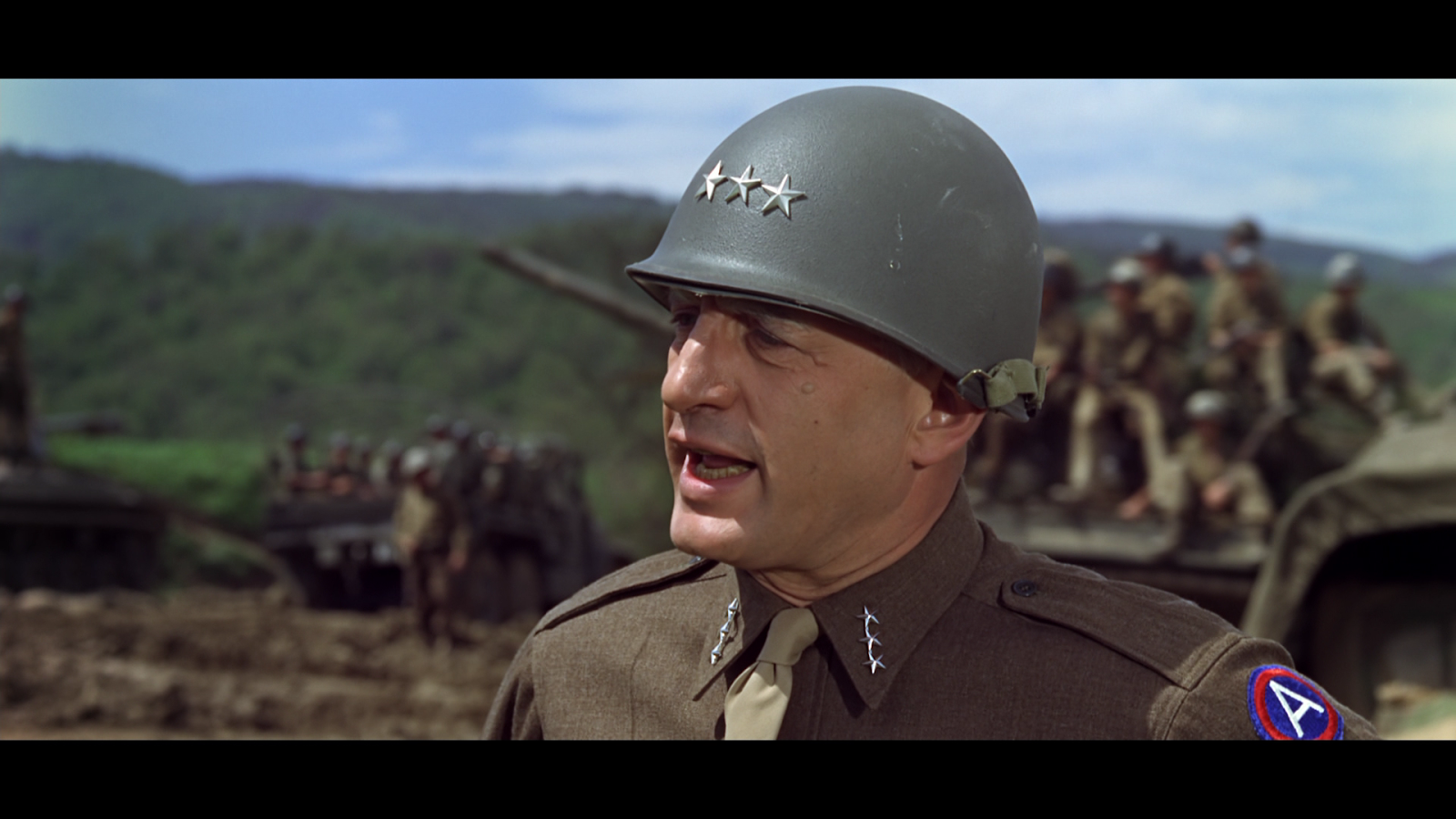
George C.. Scott as Gen. Patton in “Patton”

George C. Scott extensively studied the brilliant, eccentric Gen. George S. Patton in preparing for the role. Scott displays the brilliance and the temper of the general, who was a major figure in World War II.

Scott, who won the Best Actor Award, had refused the Oscar nomination but won the award anyway. In a letter to the Academy, he stated that he did not feel himself to be in competition with other actors.

In addition to Scott, actors in the film included Karl Malden, Stephen Young and, if you dig further down in the credits, Tim Considine.

Other contenders for the 1970 Best Picture award included “Airport,” “Five Easy Pieces,” and “M*A*S*H.”

The French Connection, 1971, directed by William Friedkin

“The French Connection,” the 1971 Best Picture winner, is a high-energy, landmark film about international smuggling of heroin into New York City and a maverick detective’s efforts to try to stop it.

The great chase scenes through NYC streets are among the greatest in film history, which earned the film editors a well-deserved Oscar.. You will catch yourself moving back and forth in your seat (if you can manage to stay in it) trying to dodge the cars.

Gene Hackman is the star of this film, but the great cast also includes Fernando Rey, Roy Scheider, and Tony LoBianco.

Other nominees for the 1971 Best Picture honor included “Clockwork Orange,” “Fiddler on the Roof,” “The Last Picture Show,” and “Nicholas and Alexandra.”

The Godfather, 1974, Francis Ford Coppola

Hollywood has given us many notable gangster or mob films, but the two Oscar Best Picture winning “Godfather” movies gave us a greater sense of that world than ever before.

“The Godfather,” 1972, and “The Godfather Part 2, 1974, hold the distinction of being the only films that both the original and the sequel won the Academy Award for Best Picture.

In the first movie, we see Marlon Brando as Vito Corleone, the “godfather,” in a role that some critics view as his greatest film performance. The other members of this great cast include Al Pacino, James Caan, Diane Keaton, Talia Shire, Robert Duvall, Sterling Hayden, Abe Vigoda, singer Al Martino, and Alex Rocco.

This is a story about gangsters, but also one about families, not just crime families but in this case about Italian families seeking their version of the American dream and power.

It’s hard to imagine any other movie winning the 1972 Oscar for Best Picture than this Francis Ford Coppola masterpiece, but the other contenders included “Cabaret,””Deliverance,” “Sounder.”

EPSON MFP image
Marlon Brando As Vito Corleone in “The Godfather.”